

As manufacturing businesses grow, waste management often becomes fragmented.
Individual sites arrange services locally, suppliers vary by location, and reporting formats differ across the business. The result is predictable: limited visibility, inconsistent performance and rising costs. This fragmentation is exactly where coordinated multi-site manufacturing waste management delivers its greatest value.
For multi-site manufacturers, regaining control of waste spend requires coordination — not centralisation at the expense of operational flexibility.
Across multi-site manufacturing businesses we support, loss of waste spend control is rarely intentional. It typically develops as sites make local decisions to keep operations running, while central teams lose visibility of how services, costs and compliance vary across the estate.
Why waste spend escalates across multiple sites
Common challenges in multi-site manufacturing waste management include:
- Different suppliers and contracts at each location
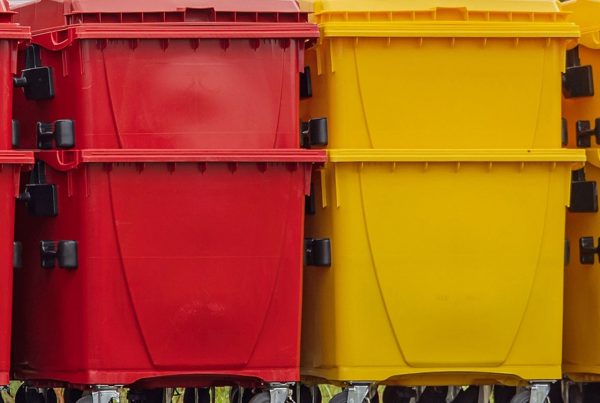
- Inconsistent container types and collection frequencies
- Limited ability to compare performance
- No single view of total waste spend
- Variable compliance standards
As noted by industry experts, this fragmentation is prompting leading manufacturers to seek more direct, strategic partnerships for their multi-site operations.
Without oversight, inefficiencies compound across the organisation.
What we commonly see across multi-site operations
- Different waste suppliers and contract terms at each site
- Collection frequencies set historically rather than operationally
- Limited ability to compare waste performance between locations
- Inconsistent compliance documentation across the estate
- Industrial waste services spend treated as a local cost rather than a managed function
Central oversight, local delivery
Effective waste management for multi-site businesses balances:
- Central control of strategy, data and contracts
- Local delivery that reflects site-specific operations
This allows businesses to standardise where it matters — reporting, compliance, performance — while maintaining flexibility on site.

Standardising data to enable better decisions
Without consistent data, cost control is impossible. A coordinated approach introduces:
- Standard waste stream definitions
- Consistent reporting formats
- Comparable performance metrics
- Central visibility across sites
This enables finance and operations teams to identify where costs can be reduced and performance improved through manufacturing waste reporting systems.
Controlling cost without compromising service
Regaining control of waste spend does not mean reducing service levels.
In practice, sustainable cost control comes from removing inconsistency rather than reducing service. When data, reporting and review processes are standardised, inefficiencies become visible and can be addressed without disrupting site operations. This structured approach to waste management helps uncover hidden savings and inefficiencies. Read more about how this approach is applied to utilities waste management.
Instead, it focuses on:
- Eliminating over-servicing
- Improving segregation
- Aligning collections to production
- Recovering value from commodities
- Forecasting spend accurately
These improvements deliver sustainable savings rather than short-term cuts.
Strengthening compliance across the estate
Multi-site operations increase compliance risk when systems vary by location. Central oversight ensures:
- Consistent Duty of Care standards
- Approved contractors across all sites
- Accessible documentation and audit trails
This reduces risk and simplifies governance.
Next step
If waste spend is difficult to track or compare across sites, it may be time to review how waste is managed at an estate level.
Multi-site waste management works best when strategy, data and oversight are coordinated centrally, while delivery remains aligned to site needs. With the right structure in place, manufacturers can regain control of waste spend without sacrificing operational flexibility.
Request a Waste Mission Portal demo to learn how Waste Mission supports multi-site manufacturers.
About Waste Mission
Waste Mission supports multi-site manufacturing, food production and engineering businesses with total waste management, centralised reporting and compliance oversight, helping organisations improve control, consistency and cost transparency across their operations.