


Sustainability reporting has moved well beyond marketing statements and headline recycling rates.
For many businesses — particularly in manufacturing, food production and engineering — waste reporting data is now reviewed by customers, auditors, investors and procurement teams.
In this environment, reporting needs to be accurate, consistent and defensible. Good sustainability reporting is not about saying the right things. It is about being able to prove them.
Across manufacturing, food production and engineering businesses we support, sustainability reporting is increasingly scrutinised by customers, auditors and procurement teams. In many cases, the challenge is not a lack of data, but a lack of confidence in its accuracy, consistency and traceability.
Why waste data is under increasing scrutiny
Waste data plays a growing role in:
- ESG reporting
- Customer tenders and audits
- Supply chain assessments
- Internal performance tracking
As expectations increase so does the risk of relying on incomplete or inconsistent information.
Common challenges include:
- Data coming from multiple suppliers in different formats
- Manual spreadsheets that are difficult to verify
- Gaps in historical records
- Limited ability to trace waste streams end-to-end
These issues don’t just create reporting headaches — they undermine confidence in the data itself.
What we commonly see in waste reporting
- Data compiled manually from multiple suppliers
- Inconsistent waste classifications across sites
- Recycling and recovery figures reported without clear methodology
- Difficulty linking reported data back to source documentation
- Limited confidence in figures during audits or customer reviews
What credible reporting actually requires
Reporting that stands up to scrutiny is built on solid foundations.
This typically includes:
- Accurate waste stream classification
- Consistent data capture across sites
- Clear links between collections, transfers and treatment outcomes
- Transparent reporting of recycling and recovery rates
- Accessible audit trails
Without these elements, even well-intentioned reporting becomes difficult to defend.
The risk of over-simplified metrics
Headline figures can be misleading if they are not supported by detail.
For example:
- Recycling rates without context
- Assumptions about recovery routes
- Inconsistent treatment of different waste streams
- When challenged, these weaknesses quickly become apparent.
Credible reporting accepts complexity and focuses on accuracy rather than optics.
Turning waste data into a management tool
High-quality reporting should do more than satisfy external requirements.
In practice, the most useful waste data is consistent over time and comparable across sites. When reporting is structured and reliable, it allows businesses to distinguish between genuine performance improvement and changes driven by production volumes or operational disruption.
When waste data is reliable, it can support:
- Cost control and forecasting
- Identification of inefficiencies
- Performance benchmarking across sites
- Evidence-based decision-making
In this way, sustainability reporting becomes a practical management tool rather than a compliance exercise.
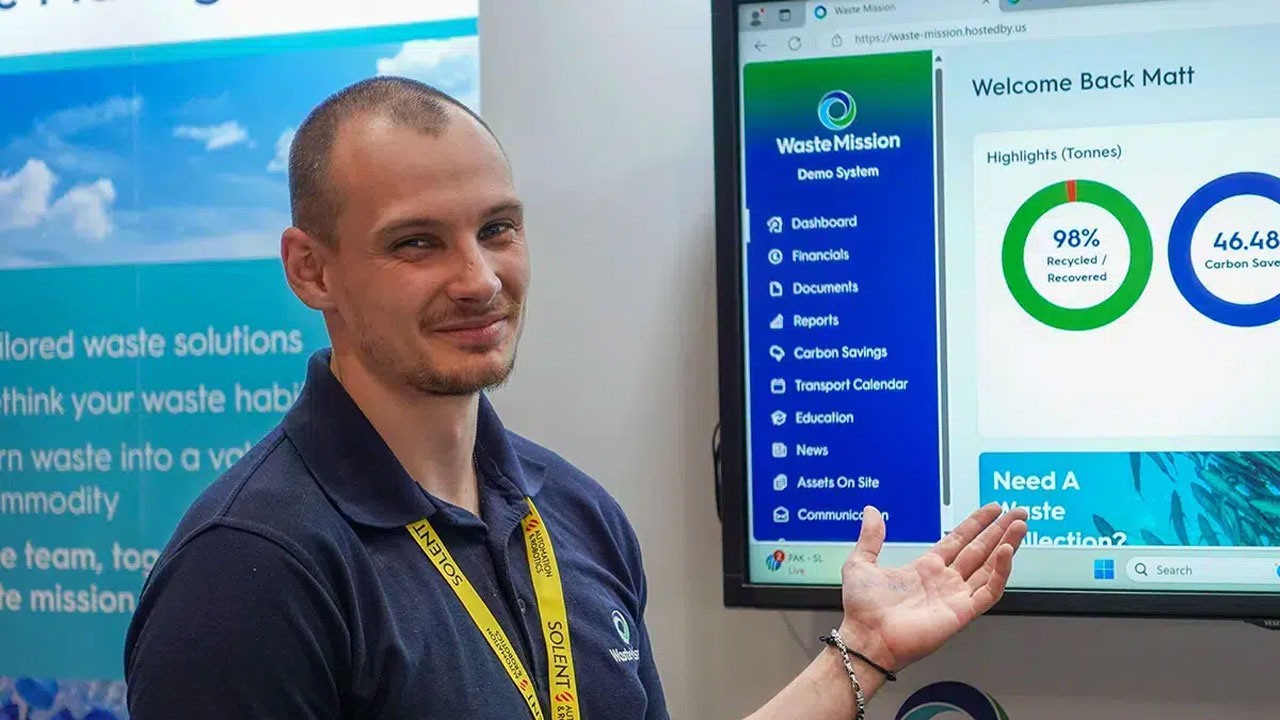
Building confidence through better systems
The most reliable reporting comes from systems designed to capture data correctly from the outset.
Centralised reporting platforms allow businesses to:
- Standardise data across suppliers and sites
- Access documentation quickly
- Track trends over time
- Respond confidently to audits and enquiries
This reduces the risk of error and increases trust in the figures being reported.
Next step
Sustainability reporting stands up to scrutiny when it is built on accurate data, clear methodology and transparent records. With the right systems in place, waste reporting becomes a source of confidence rather than uncertainty – supporting both compliance and operational decision-making.
Request a Portal demo or book a waste review to learn more.
About Waste Mission
Waste Mission supports manufacturing, food production and engineering businesses with waste reporting, compliance and total waste management, helping organisations produce accurate, auditable sustainability data they can stand behind.