
The Environment Agency estimates that waste crime costs the UK economy around £1billion every year. Every business has a legal responsibility to track its waste from the moment it leaves the premises. Failure to comply can risk severe penalties. Rushed paperwork can lead to mistakes and waste mis-categorisation. Well-executed waste transfer notes (WTNs) help close those gaps, keeping records compliant and accurate.
Put simply, if your business produces, carries, or receives hazardous or non-hazardous waste, you need a complete and accurate record. The record should show the type of waste, when it was moved, and by whom. It also needs to show whether you used a licensed waste carrier, and its destination. You also need to be able to show this to regulators or your local council upon request.
What is a waste transfer note?
A waste transfer note (WTN) is a document, paper or digital. A WTN records the transfer of commercial waste between two parties, such as a haulage business and its waste contractor.
The waste transfer note contains key information, including:
- The type and quantity of waste, the European Waste Catalogue (EWC) code.
- The containers and storage used for the waste.
- The details and signatures of both the waste producer and the waste carrier.
The European Waste Catalogue Code, also known as the LoW (List of Waste) code, is a six-digit number used to classify waste types for legal purposes, handling, and disposal in Europe.
Waste Transfer Notes can be set up for a single collection or as season tickets, covering repeated transfers of the same waste type between the same parties over up to 12 months. Businesses can use the UK government’s duty-of-care waste transfer note template or equivalent documentation from a compliant waste management provider.
If you are a UK business, WTNs help you provide accurate information, comply with your duty of care, demonstrate your environmental commitment, and avoid fines.
How do waste transfer notes fit into UK waste law?
Under section 34 of the Environmental Protection Act and the Waste Duty of Care Code of Practice, anyone who produces, imports, keeps, transports, treats, or disposes of controlled waste has a legal duty to ensure it is handled safely. Under this legislation, waste must only be transferred to an authorised person with the correct permits. The WTN provides formal evidence that these requirements have been met.
Regulators such as the Environment Agency, Natural Resources Wales, and SEPA expect businesses to retain transfer notes (or equivalent records) for at least two years. These notes must be stored securely and produced upon request during inspections or investigations. If you fail to do so, then you might be subject to fines or prosecution. It can also affect your relationship with suppliers that require this type of evidence.
What information must a WTN include?
To be valid, a waste transfer note must provide sufficient detail to ensure the waste is handled, recovered, or disposed of appropriately. It needs to demonstrate that the handling posed no risk to people or the environment.
As a minimum, this should include:
- A clear description of the waste, and its containment. For example, baled cardboard, 1100‑litre wheelie bin of mixed dry recyclables.
- The correct EWC code and whether the waste is hazardous or non‑hazardous.
- The quantity of waste – weight, volume or number of items.
- The date and time of transfer.
- The names, addresses and contact details of all parties, including the place of transfer.
The note also needs to demonstrate that the waste hierarchy has been considered. It also needs to verify that the waste is being transferred to an authorised person. For example, a registered waste carrier or a permitted site, including the carrier's registration and permit numbers.
Both parties must sign the Waste Transfer Note to confirm that the information is correct and that their respective responsibilities have been met. This is often done electronically within digital portals, with signatures and supporting evidence (such as photos and weighbridge tickets) stored alongside the WTN for easy access.
Why businesses need waste transfer notes
From a compliance perspective, WTNs are really non‑negotiable. WTNs demonstrate that you verified your contractor’s credentials, accurately assessed your waste, and arranged for its collection for appropriate recovery or disposal. If waste from your site is fly‑tipped or handled illegally, regulators will first review your waste transfer documentation.
Complete and accessible WTNs reduce the risk of fines and reputational damage that come with non‑compliance or links to waste crime.
Beyond legal protection, WTNs can also provide a valuable data source on your business waste streams and their management. When this information is captured consistently, it is much easier to track recycling rates, disposal routes and associated carbon impacts across your sites, supporting ESG and transparency.
This supports environmental, social, and governance (ESG) reporting and provides evidence for strong sustainability storytelling to customers, investors, and employees. By seeing exactly how much of each waste stream is recycled, recovered, or disposed of, you can better target waste prevention, improve waste segregation, and unlock business efficiency. This helps businesses to operate more effectively in the circular economy, turning waste into a resource rather than a cost.
Which Waste Streams Require a Waste Transfer Note?
A common misconception in the UK manufacturing sector is that WTNs only apply to hazardous materials. In the UK, a Waste Transfer Note is legally required for every load of non-domestic waste that leaves your premises. For your factory, this covers all output streams, including:
- General Waste: All standard skip and bin refuse.
- Dry Mixed Recycling (DMR): Cardboard, plastics, and metals generated from packaging or offices.
- Manufacturing by-products: Specific industrial streams like non-hazardous swarf, metal waste, wood, or clean plastic offcuts.
- WEEE (Waste Electrical and Electronic Equipment): Although WEEE requires extra documentation, it starts with a WTN.
For compliant operations, it’s advisable to assume that every commercial collection requires a WTN to comply with UK Duty of Care regulations.
WTNs and digital waste tracking
Traditionally, businesses have relied on paper notes completed by drivers at the point of collection, then filed away on‑site. While this can currently meet the basic legal requirement, it can make it difficult to analyse trends, respond quickly to regulatory requests, or share information across multiple locations. Paper records are also subject to loss, damage and illegible handwriting.
Incoming digital waste tracking requirements for UK businesses
The UK is preparing for mandatory digital waste tracking, expected to become law around April 2026. This legislation will require detailed recording of waste movements for all businesses, regardless of size or sector. A consistent digital record, bringing together scattered waste data, and providing clear, trackable data, will be necessary for future business operations. The information that waste transfer notes contain will feed directly into the new national system.
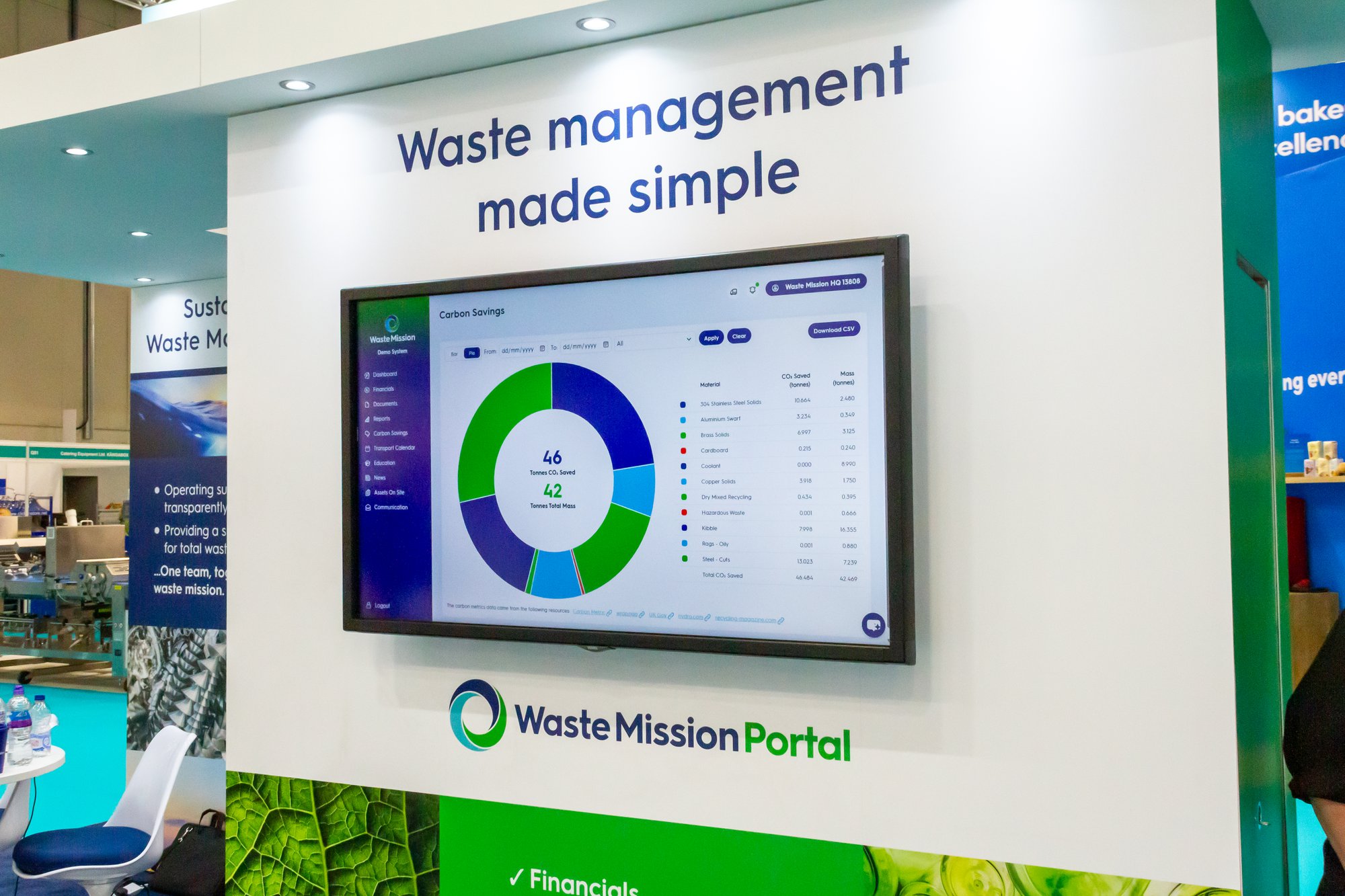
Waste Mission’s customer waste management portal is a live waste management tool. The portal allows customers to download waste transfer notes, invoices and photographic evidence in one place, alongside dashboards that show waste types, tonnages, disposal routes and carbon savings.
Simplying complex waste management and compliance
WTNs can help improve operations. When used well, WTN data can help uncover inefficiencies and cost-saving opportunities. When each collection is logged with accurate weights and material descriptions, you can better identify waste hotspots, review factors such as container sizes and collection frequencies, reduce emissions, and improve on‑site operations. You can also better compare performance over time. This can also help unlock rebates for high‑value recyclables.
Waste Mission focuses on simplifying complex waste streams while maximising sustainability. Our innovative approach helps businesses turn waste into an opportunity to grow the circular economy. As part of this, WTNs are not treated as a tick‑box exercise but as a real foundation for better decision‑making.
Keen to know more? Our team are on hand to provide a no-obligation customer portal demo to show how you can innovate your waste management tracking, or book a no-obligation waste review to find out how you can use WTNs to improve your business operations.